PFAS have been in the news a lot over the past few years, and if you live in San Diego County you’ve probably seen headlines about them. The science is real, the regulation is finally catching up, and there are practical steps you can take at home. This post walks through what PFAS actually are, where they come from, what San Diego’s water situation looks like, and what treatment methods are proven to reduce them.
What PFAS are
PFAS stands for per- and polyfluoroalkyl substances. The group includes thousands of synthetic chemicals that have been manufactured and used in consumer products and industrial processes since the 1940s. Common uses have included non-stick cookware coatings, stain-resistant fabrics, food packaging, firefighting foam, and waterproofing treatments.
The reason they’ve earned the nickname “forever chemicals” is chemical stability. The carbon-fluorine bond is one of the strongest in organic chemistry, which is why PFAS don’t break down easily in the environment or in the human body. They accumulate in soil, surface water, groundwater, and living tissue over time.
The two most studied compounds are PFOA (perfluorooctanoic acid) and PFOS (perfluorooctane sulfonate), though many other compounds in the family are now under regulatory scrutiny.
The 2024 EPA national drinking water limits
For decades, PFAS in drinking water were effectively unregulated at the federal level. That changed in April 2024 when the U.S. Environmental Protection Agency finalized the first enforceable national primary drinking water regulation for PFAS.
The rule set maximum contaminant levels (MCLs) for six PFAS compounds:
- PFOA and PFOS individually: 4 parts per trillion (ppt)
- PFNA, PFHxS, and HFPO-DA (GenX chemicals) individually: 10 ppt
- A mixture standard for PFNA, PFHxS, HFPO-DA, and PFBS
These are legally enforceable limits, not guidelines. Public water systems are required to monitor for these compounds, notify the public of results, and take action if levels exceed the MCLs. Water systems have until 2029 to come into full compliance, with monitoring beginning before that date.
The EPA’s announcement acknowledged that PFAS exposure has been linked in epidemiological studies to effects on the immune system, thyroid function, and certain cancer risks, particularly with long-term high-level exposure. The National Institute of Environmental Health Sciences has published research summarizing these documented health associations. The agency was careful to note that the science continues to evolve and that the new rule was based on a weight-of-evidence approach.
How PFAS get into drinking water
PFAS reach water supplies through several pathways. Industrial discharge from manufacturing facilities is one route. Military bases and airports that used aqueous film-forming foam (AFFF) for firefighting training have contaminated groundwater near many sites across the country.
Consumer products that contain PFAS can leach the chemicals into landfill leachate, which can reach groundwater. Agricultural land treated with PFAS-containing biosolids (treated sewage sludge used as fertilizer) is another documented pathway.
San Diego County gets most of its drinking water from imported sources: the Colorado River via the Metropolitan Water District, and the State Water Project, which brings water from Northern California. San Diego also has local reservoirs and some groundwater wells, though imported water makes up the large majority of supply.
The San Diego County Water Authority and the City of San Diego Water Department both publish annual water quality reports. As of the most recent publicly available reports, detected PFAS levels in the main distribution system have been at or near the detection limit for most compounds, below the new EPA MCLs. However, results vary by source and sampling location, and the monitoring landscape is changing as more sensitive testing methods become standard.
If you want to know what’s in your specific tap water, the most direct step is to check your water provider’s latest Consumer Confidence Report (CCR), which is required to be published annually. The City of San Diego publishes its annual water quality and CCR reports on the Public Utilities site. You can also get your home tap water tested by a state-certified laboratory if you want a direct measurement rather than a system average.
What actually reduces PFAS at home
Not all home water treatment methods reduce PFAS effectively. Understanding what works matters before you spend money on a filter.
Reverse osmosis
Reverse osmosis (RO) is the most well-documented point-of-use technology for PFAS reduction. In an RO system, water is forced under pressure through a semi-permeable membrane with pores small enough to block dissolved contaminants including PFAS compounds, heavy metals, nitrates, and total dissolved solids.
NSF International’s standard NSF/ANSI 58 covers reverse osmosis systems, and products certified to this standard under Protocol P473 have been tested to reduce PFOA and PFOS. When evaluating an RO system, look for third-party certification to NSF/ANSI 58 with the P473 addendum specifically for PFAS.
Under-sink RO systems treat water at the point of use, typically at a kitchen faucet, delivering filtered water for drinking and cooking. They produce a concentrated waste stream that goes down the drain, which is a normal part of how RO works.
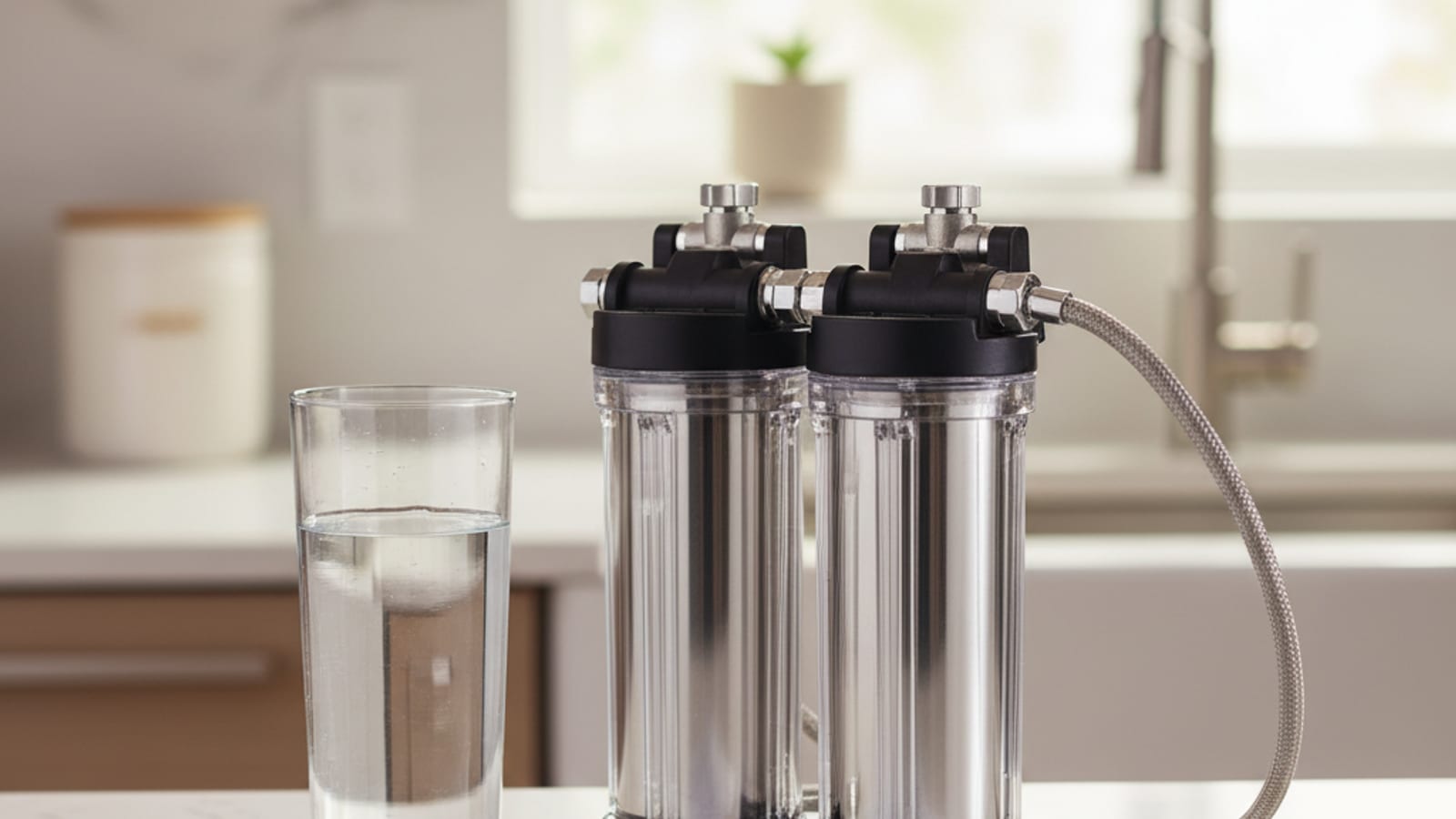
At Filter Pros San Diego, our reverse osmosis drinking water systems use medical-grade stainless steel tanks rather than the plastic-lined pressure vessels common in standard units. Plastic-lined tanks introduce their own potential for off-gassing and contamination over time. Stainless steel is inert and doesn’t interact with the water it holds.
Activated carbon and PFAS-specific media
High-quality granular activated carbon (GAC) can reduce some PFAS compounds, particularly longer-chain PFAS like PFOA and PFOS. The effectiveness depends heavily on contact time, carbon quality, media age, and competing contaminants in the water. Carbon filters are generally considered less reliable than RO for consistent PFAS reduction across the full range of compounds now regulated.
Some manufacturers offer media specifically designed and certified for PFAS reduction. As with any filtration claim, the key is third-party certification to a recognized standard (NSF, WQA) rather than marketing language alone.
What does not reduce PFAS
Standard pitcher filters, including most activated carbon pitchers, are not certified to reduce PFAS. Boiling water does not reduce PFAS and may actually concentrate them as water volume decreases. Water softeners, which are designed to address hardness minerals, do not reduce PFAS.
Putting it in perspective
The 2024 EPA rule is a meaningful step, and it reflects how seriously regulators now take PFAS in drinking water. For most San Diego households connected to the main distribution system, detected levels in the tap water are low. That said, PFAS are persistent chemicals, the regulatory limits are very low by historical standards, and some households (particularly those near military installations or industrial sites) may have higher exposure.
For anyone who wants certainty rather than system averages, an RO system at the kitchen tap is the most practical and well-documented solution available for home use. It addresses PFAS along with a broad range of other dissolved contaminants at the same time.
If you’re not sure what’s actually in your water, start with a test before deciding on treatment. We offer a free in-home water test that gives you a clear picture of your water’s actual composition, not a guess. From there, we can recommend what treatment, if any, makes sense for your home.
For questions or to schedule your test, call us at (858) 925-5546. We serve homeowners throughout San Diego County.
Related: PFAS removal systems for San Diego homes | Whole-house water filtration options