How reverse osmosis drinking water works
Reverse osmosis is one of the few filtration methods that removes a wide range of dissolved contaminants, including PFAS, nitrates, arsenic, and heavy metals. It works at the molecular level by forcing water through a semi-permeable membrane under pressure. Understanding the process helps you maintain the system and know what it's actually doing for your water.
What you'll learn
- What osmosis is and how reverse osmosis uses pressure to filter in the opposite direction
- What the semi-permeable membrane actually blocks and what passes through
- How a multi-stage RO system is structured, from sediment pre-filter to post-carbon polish
- Why RO systems produce some wastewater and how modern systems reduce that ratio
- What a storage tank does and how to know when the membrane or filters need replacing
Step by step
- Water first passes through a sediment pre-filter to remove particles that would clog the membrane.
- A carbon pre-filter reduces chloramine and chlorine, which degrade RO membranes over time.
- The treated water is then pushed under household pressure through the semi-permeable membrane.
- The membrane allows water molecules through but rejects dissolved solids, sending them to drain as concentrate.
- Filtered water collects in a small pressurized storage tank under the sink.
- A post-carbon polishing filter removes any taste or odor picked up in the tank before water reaches your glass.
RO membranes typically last two to three years depending on water quality and usage. Pre-filters need replacing every six to twelve months. If water output slows noticeably or taste changes, a filter change is usually the fix before replacing the membrane.
Rather have a pro handle it?
Water filtration and treatment across San Diego County. A real person picks up, free in-home water test.
Keep learning.
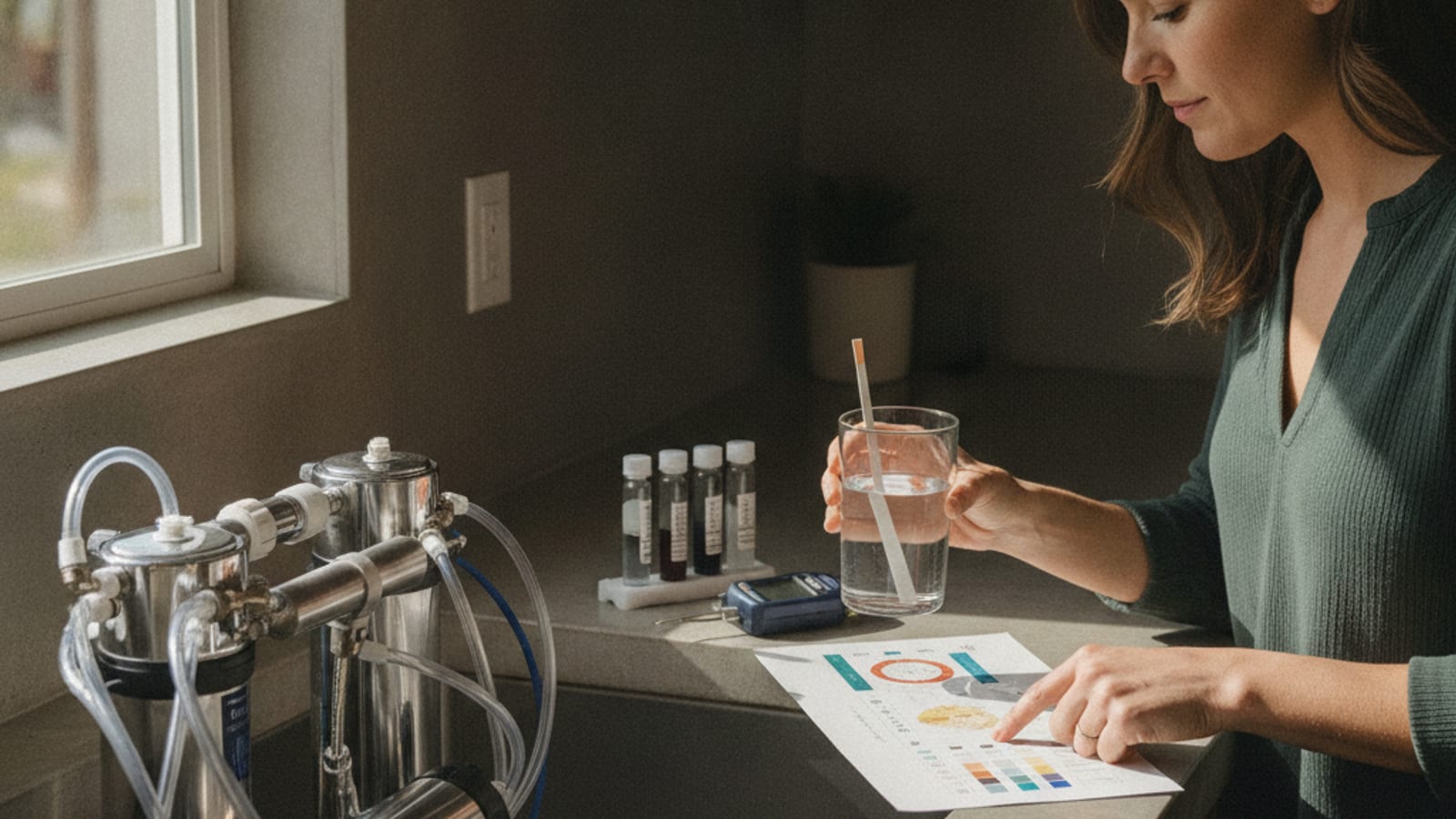
How to test your tap water at home
San Diego tap water regularly tests at 17 to 20 grains per gallon, which puts it in the very hard category. A five-minute test strip check gives you a directional reading you can act on. It won't replace a professional analysis, but it tells you enough to know whether treatment is worth exploring.
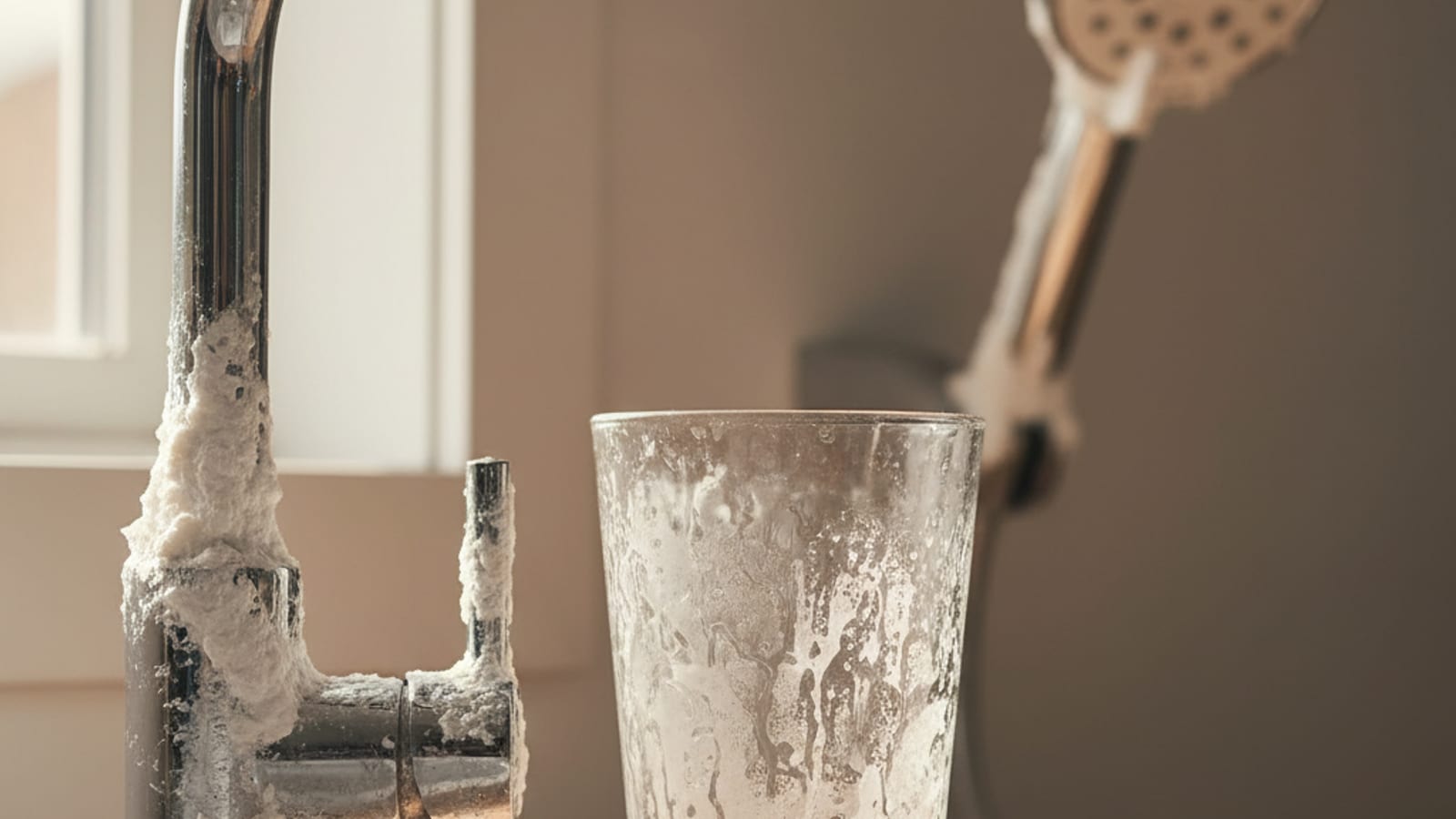
How to spot hard water in your home
Hard water doesn't smell or look different, so most homeowners don't notice it until the damage is already done. At 17 to 20 grains per gallon, San Diego sits well into the very hard range. Knowing the signs early can save you real money on appliances, plumbing, and fixtures.
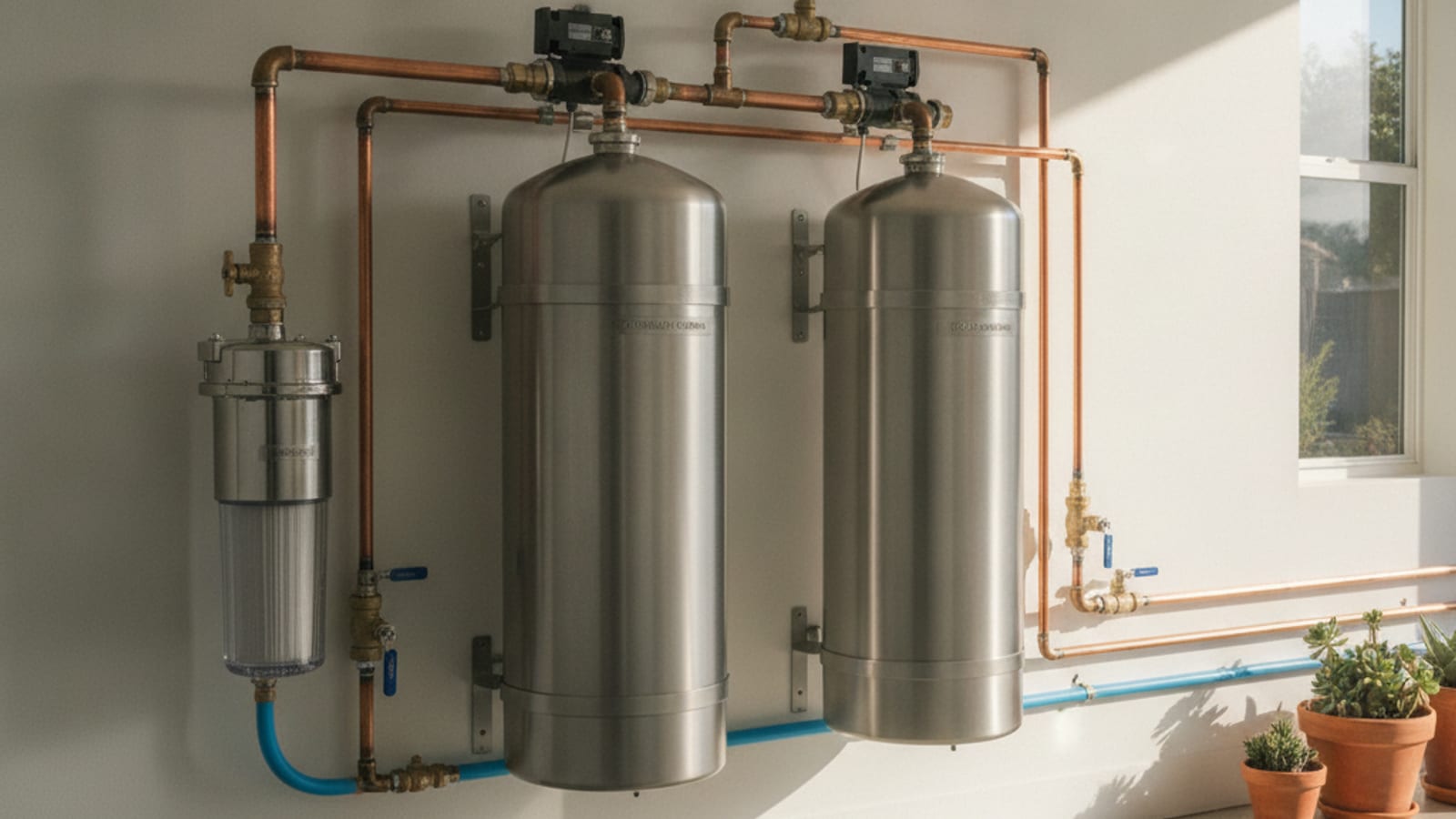
How a whole-house water filtration system works
A whole-house filter treats every tap in your home at the point where water enters the main line. That means filtered water for drinking, showering, laundry, and appliances, not just the kitchen sink. Understanding how the system is staged helps you know what it's doing and when it needs attention.