How a whole-house water filtration system works
A whole-house filter treats every tap in your home at the point where water enters the main line. That means filtered water for drinking, showering, laundry, and appliances, not just the kitchen sink. Understanding how the system is staged helps you know what it's doing and when it needs attention.
What you'll learn
- What a point-of-entry system does versus a point-of-use filter at the sink
- How multi-stage filtration works and why the order of stages matters
- What media types target sediment, chloramine, and other common San Diego water concerns
- Why tank material matters and what medical-grade stainless steel offers versus fiberglass or plastic-liner tanks
- How to know when a filter stage needs service or media replacement
Step by step
- Understand that water enters the home line and passes through the filter before it reaches any fixture.
- Stage one is typically a sediment pre-filter that removes particles, sand, and rust before they reach finer media.
- Stage two is usually an activated carbon or catalytic carbon block that reduces chloramine, chlorine, and volatile organic compounds.
- Additional stages can target specific contaminants like iron, tannins, or PFAS depending on your water profile.
- Flow rate and tank size must match your home's peak demand or you'll notice pressure drops.
- Each media bed has a rated capacity. Tracking water usage or scheduling annual service keeps the system performing.
San Diego water uses chloramine, which is harder to remove than free chlorine. Standard carbon blocks reduce it, but catalytic carbon is more effective. Ask specifically about chloramine removal when evaluating any system.
Rather have a pro handle it?
Water filtration and treatment across San Diego County. A real person picks up, free in-home water test.
Keep learning.
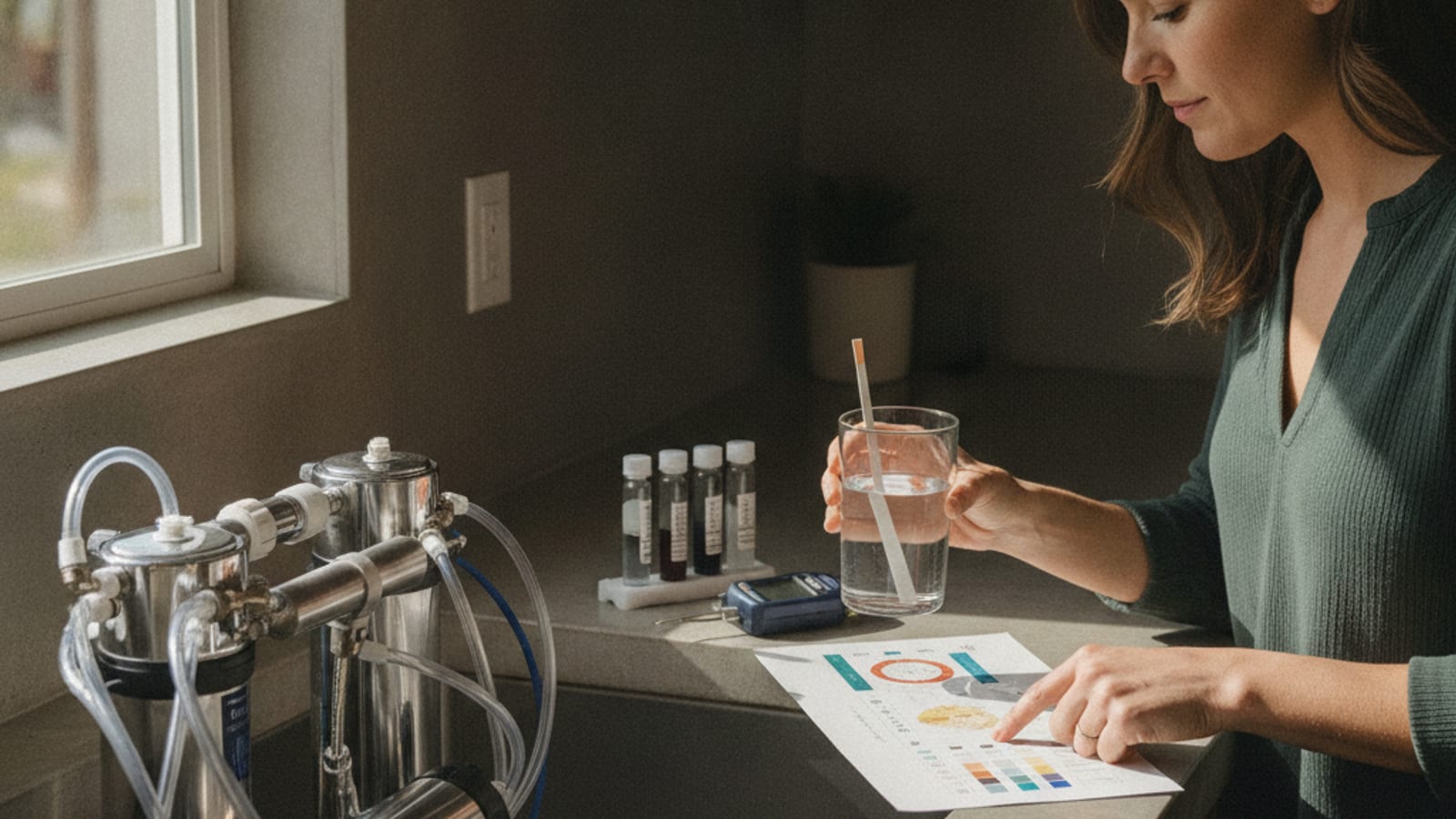
How to test your tap water at home
San Diego tap water regularly tests at 17 to 20 grains per gallon, which puts it in the very hard category. A five-minute test strip check gives you a directional reading you can act on. It won't replace a professional analysis, but it tells you enough to know whether treatment is worth exploring.
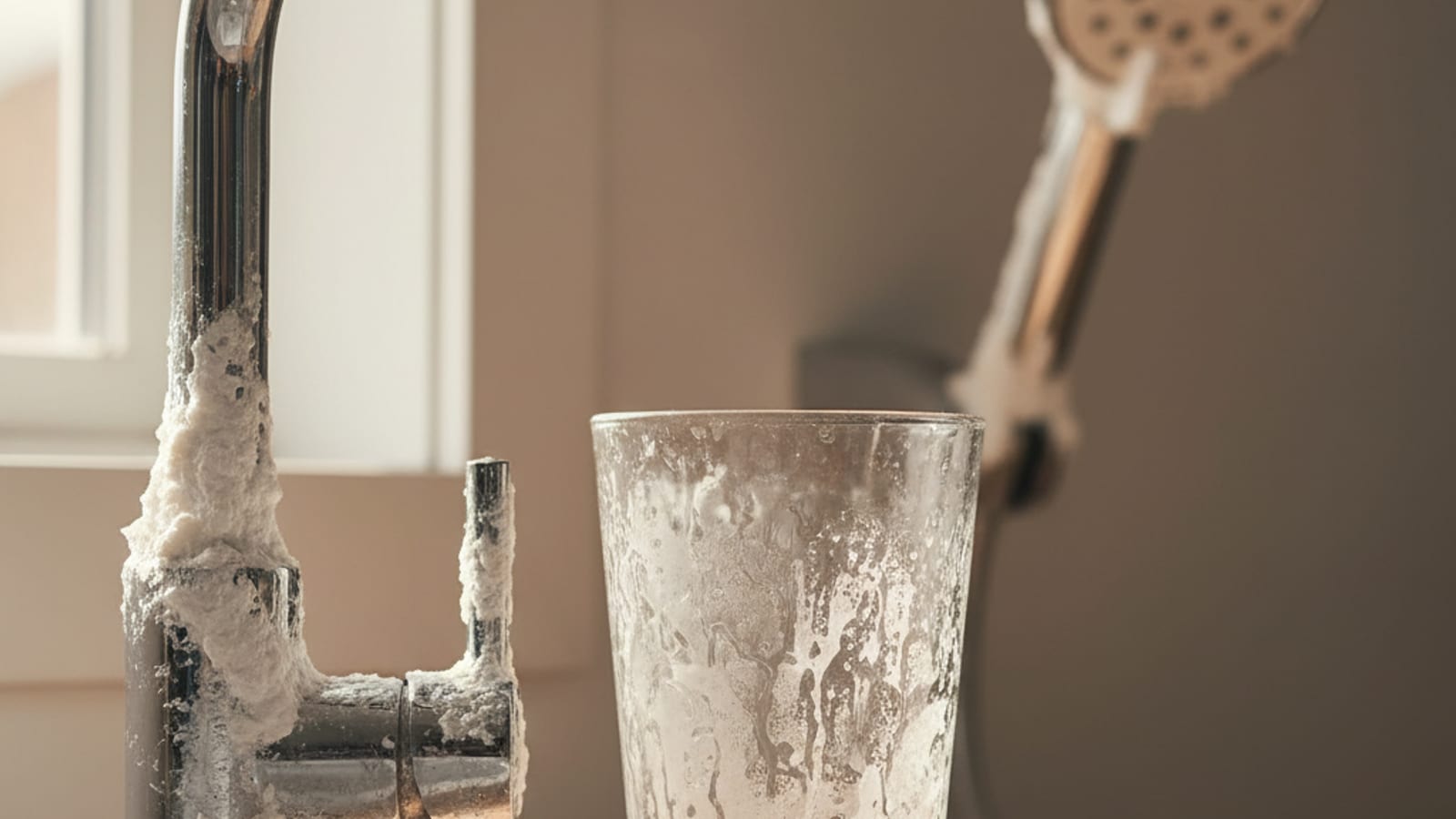
How to spot hard water in your home
Hard water doesn't smell or look different, so most homeowners don't notice it until the damage is already done. At 17 to 20 grains per gallon, San Diego sits well into the very hard range. Knowing the signs early can save you real money on appliances, plumbing, and fixtures.
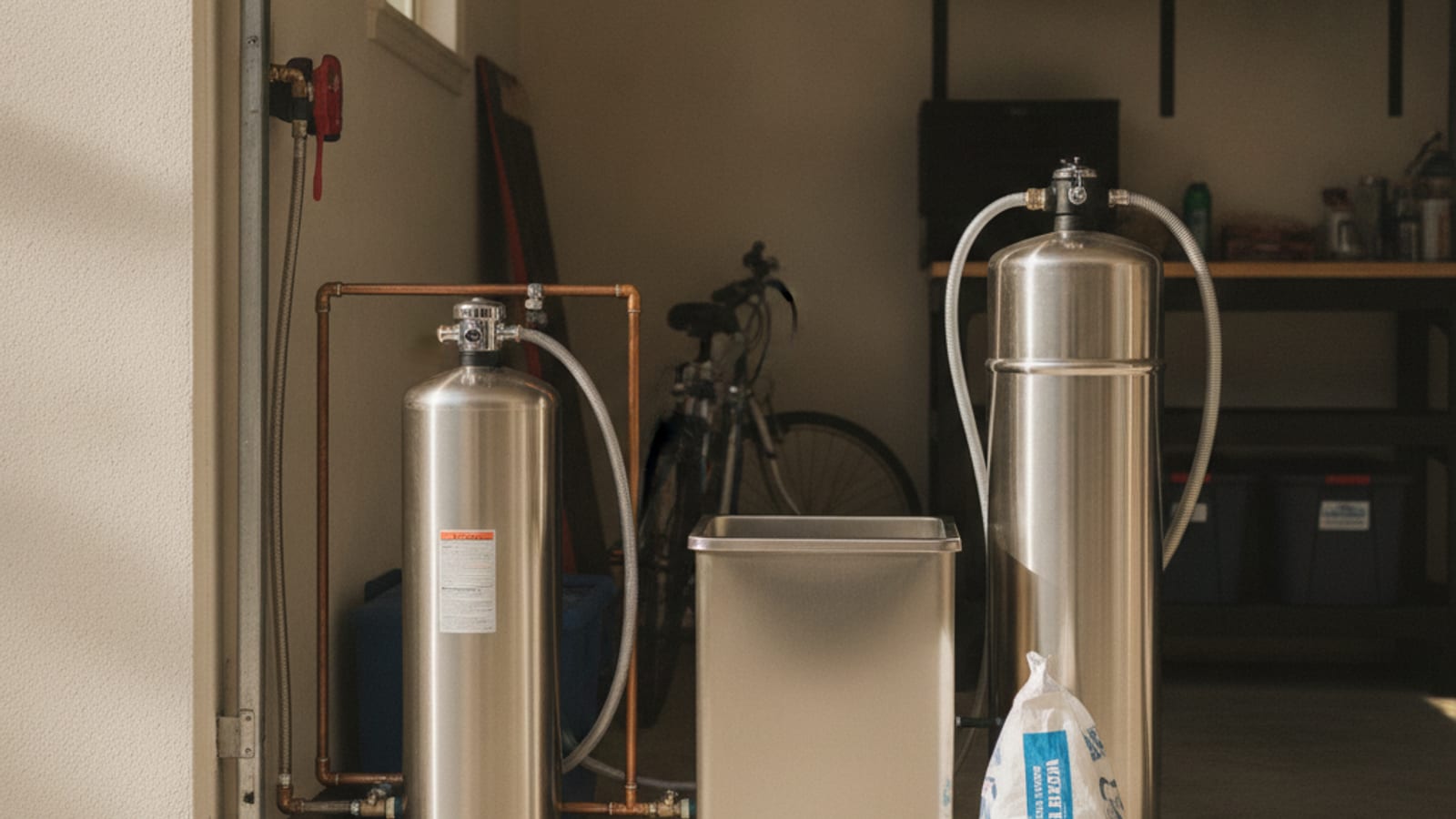
Salt-free conditioner vs salt softener, explained
Both systems address hard water, but they work differently and produce different results. One removes calcium and magnesium from the water entirely. The other changes the mineral structure so scale doesn't stick. Choosing the right one depends on your priorities, your plumbing, and how you use your water.