How to maintain a water softener
A water softener needs very little daily attention, but a few simple steps each year keep it running well and prevent the most common failures. Most homeowners skip maintenance entirely, then wonder why the system stopped working after five years instead of fifteen.
What you'll learn
- How often to check salt levels and which salt type works best for San Diego water chemistry
- What salt bridging is, how to spot it, and how to break it up safely
- How to clean the brine tank annually to prevent salt mush and resin fouling
- What a regeneration cycle is and how to confirm yours is set correctly for your household
- The signs that your resin bed may need cleaning or is approaching the end of its life
Step by step
- Check the salt level once a month. Keep the tank at least one-third full at all times.
- Press on the salt gently near the walls to feel for a salt bridge, a hard crust that floats above the brine water.
- If you find a bridge, use a broom handle to gently break it up from the top without forcing it.
- Once a year, let the salt level drop low, then scoop out any salt mush from the bottom of the tank.
- Rinse the empty tank with clean water, then refill with fresh salt before running a manual regeneration.
- Check your control valve settings. Regeneration frequency should match your actual household water use, not the factory default.
Use pellet or solar crystal salt, not rock salt. Rock salt contains impurities that accumulate in the brine tank and foul the resin over time. If your system is regenerating but water is still hard, the resin may need a cleaning treatment before anything else.
Rather have a pro handle it?
Water filtration and treatment across San Diego County. A real person picks up, free in-home water test.
Keep learning.
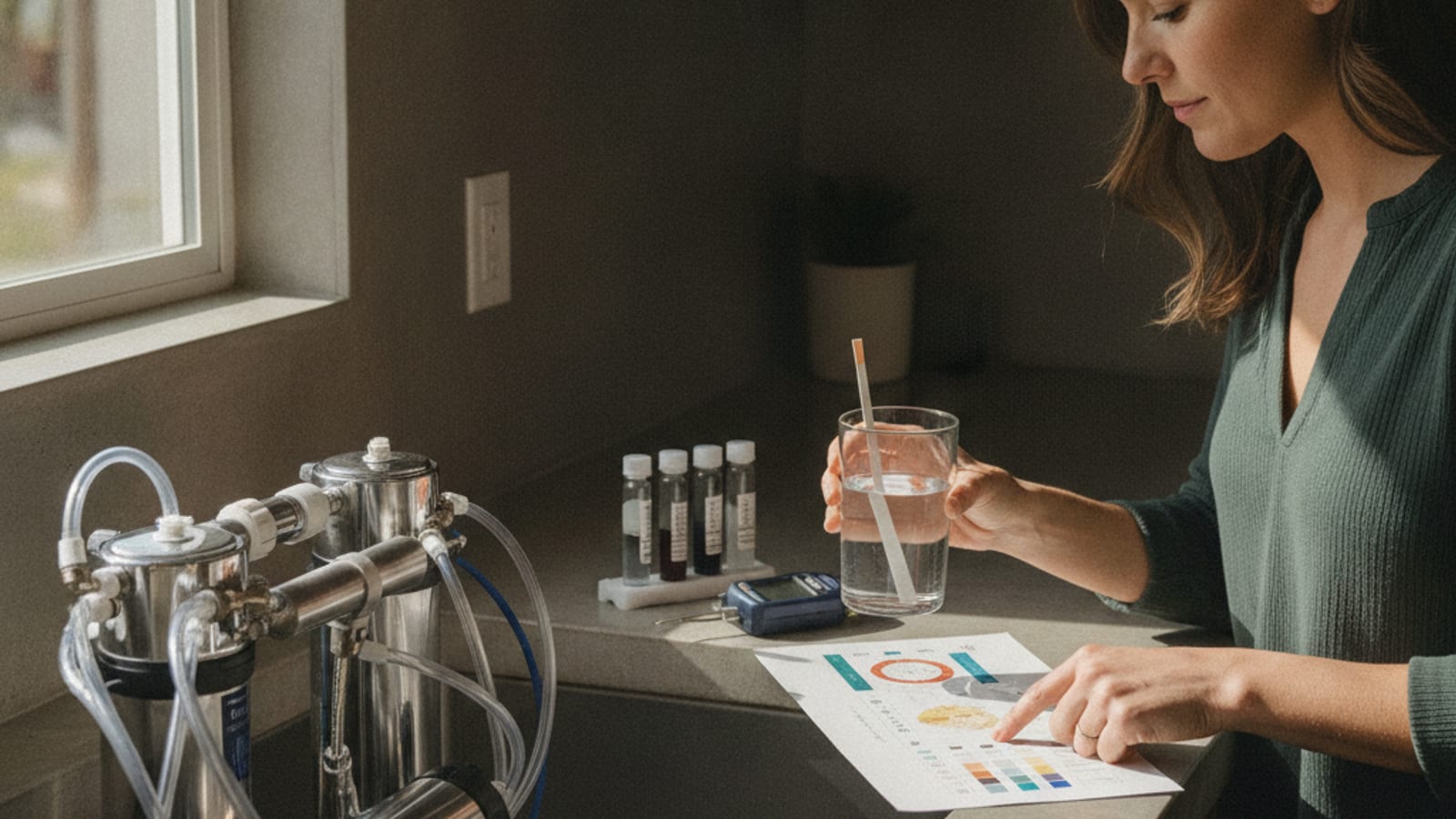
How to test your tap water at home
San Diego tap water regularly tests at 17 to 20 grains per gallon, which puts it in the very hard category. A five-minute test strip check gives you a directional reading you can act on. It won't replace a professional analysis, but it tells you enough to know whether treatment is worth exploring.
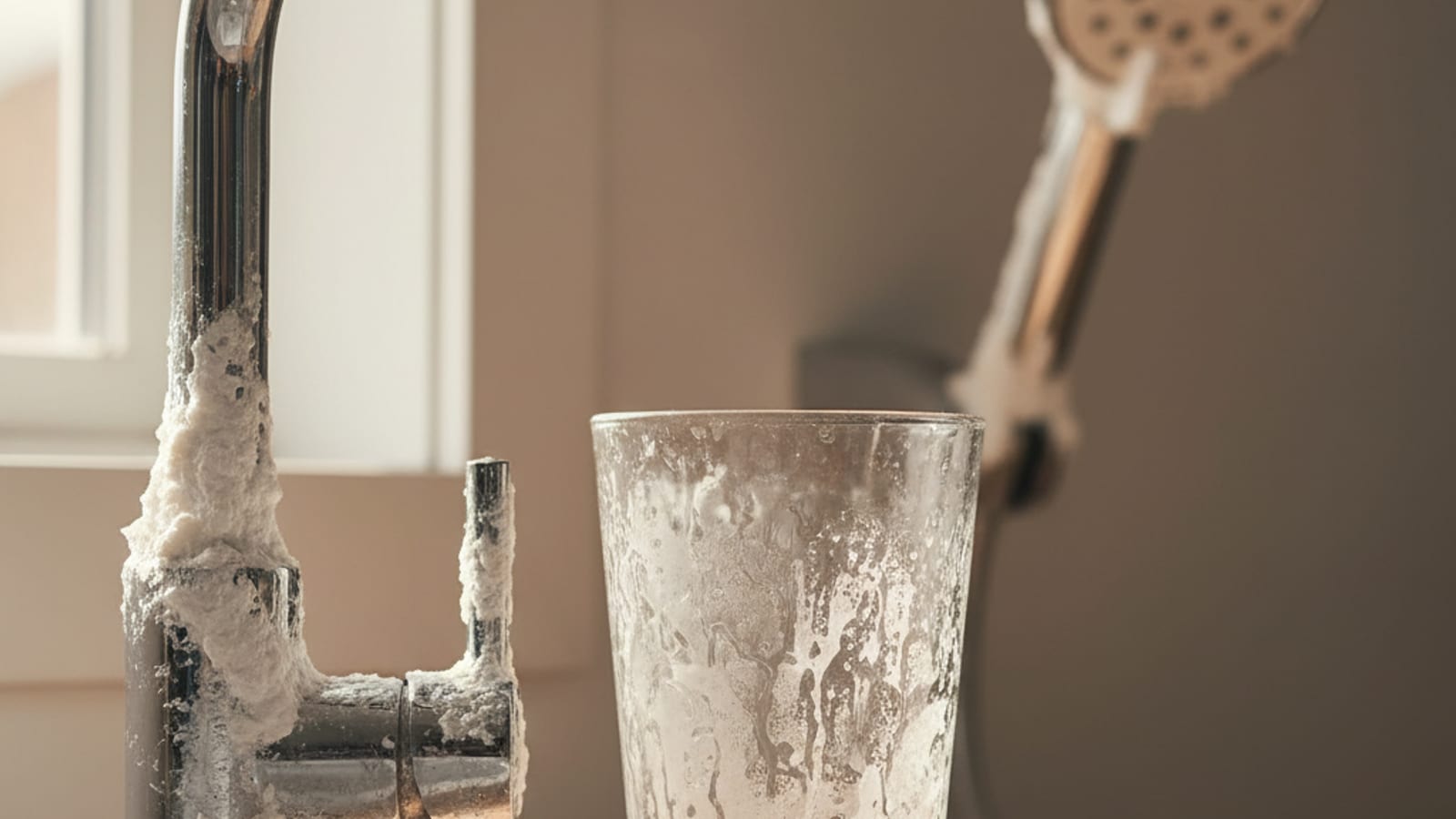
How to spot hard water in your home
Hard water doesn't smell or look different, so most homeowners don't notice it until the damage is already done. At 17 to 20 grains per gallon, San Diego sits well into the very hard range. Knowing the signs early can save you real money on appliances, plumbing, and fixtures.
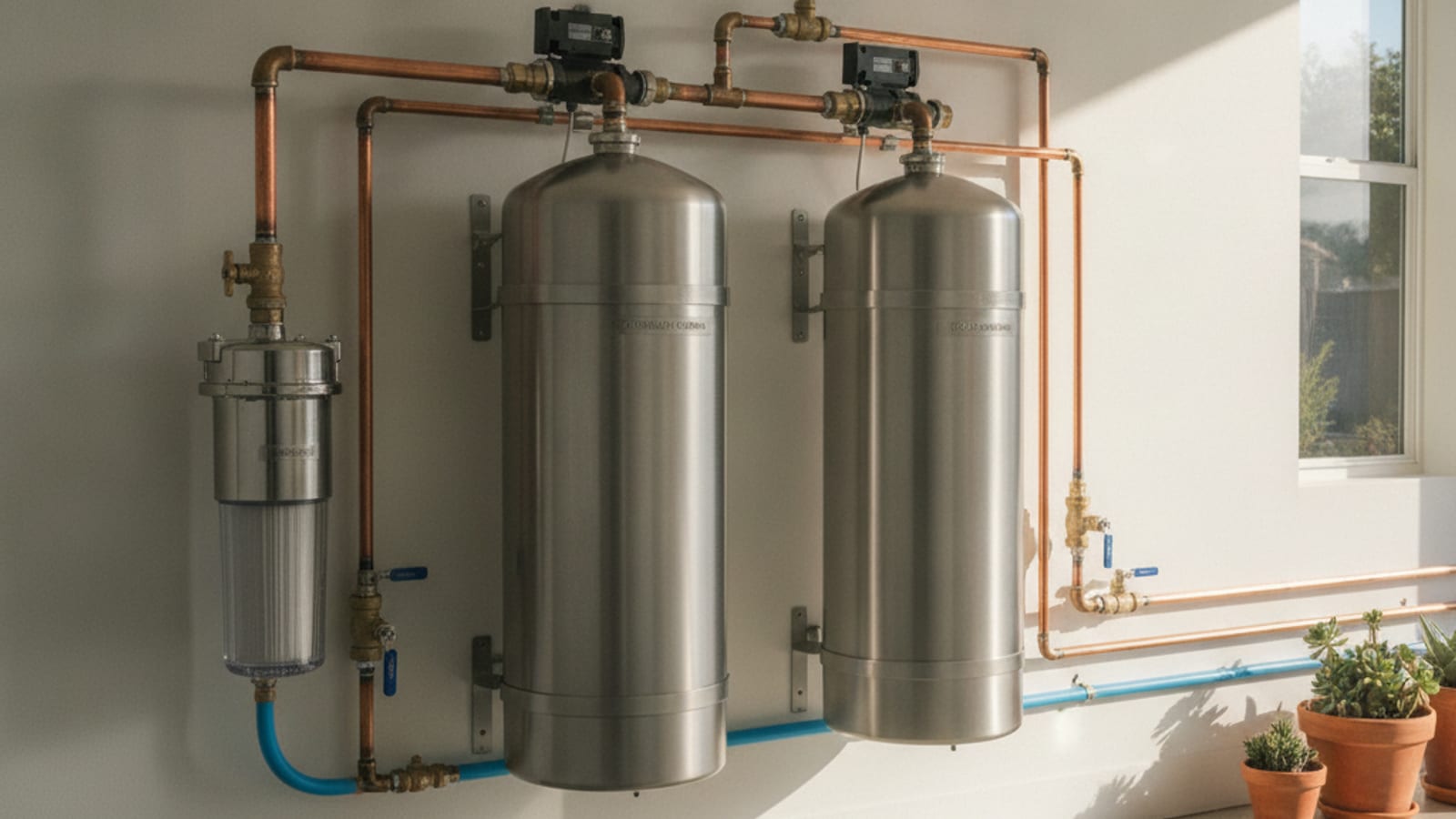
How a whole-house water filtration system works
A whole-house filter treats every tap in your home at the point where water enters the main line. That means filtered water for drinking, showering, laundry, and appliances, not just the kitchen sink. Understanding how the system is staged helps you know what it's doing and when it needs attention.