How to replace an under-sink water filter
Most under-sink filter cartridges need replacing every six to twelve months, and many homeowners go years without doing it. An expired cartridge stops filtering and can release trapped contaminants back into the water. Swapping one out takes about ten minutes with no plumbing experience required.
What you'll learn
- How to identify your filter housing type and find the correct replacement cartridge
- Why turning off the supply valve first prevents a mess and protects the housing threads
- How to inspect and seat the O-ring so the housing doesn't leak after reinstallation
- How to flush a new cartridge before you drink from it
- How to set a simple replacement reminder so the next one doesn't get skipped
Step by step
- Turn off the cold water supply valve under the sink. It's usually a quarter-turn handle or hand-turn valve.
- Open the faucet to release line pressure and drain the water remaining in the supply tube.
- Place a towel and a shallow bowl under the filter housing to catch drips.
- Use the filter wrench that came with the system to unscrew the housing counter-clockwise.
- Pull out the old cartridge, rinse the housing with clean water, and check the O-ring for cracking or flattening.
- Seat the new cartridge, hand-tighten the housing clockwise, turn the supply valve back on slowly, and let the faucet run for two full minutes to flush the new filter before drinking.
Write the installation date on the new cartridge before you put it in. Set a phone reminder for six months out. Expired cartridges can harbor bacterial growth and release concentrated contaminants, which is worse than unfiltered tap water.
Rather have a pro handle it?
Water filtration and treatment across San Diego County. A real person picks up, free in-home water test.
Keep learning.
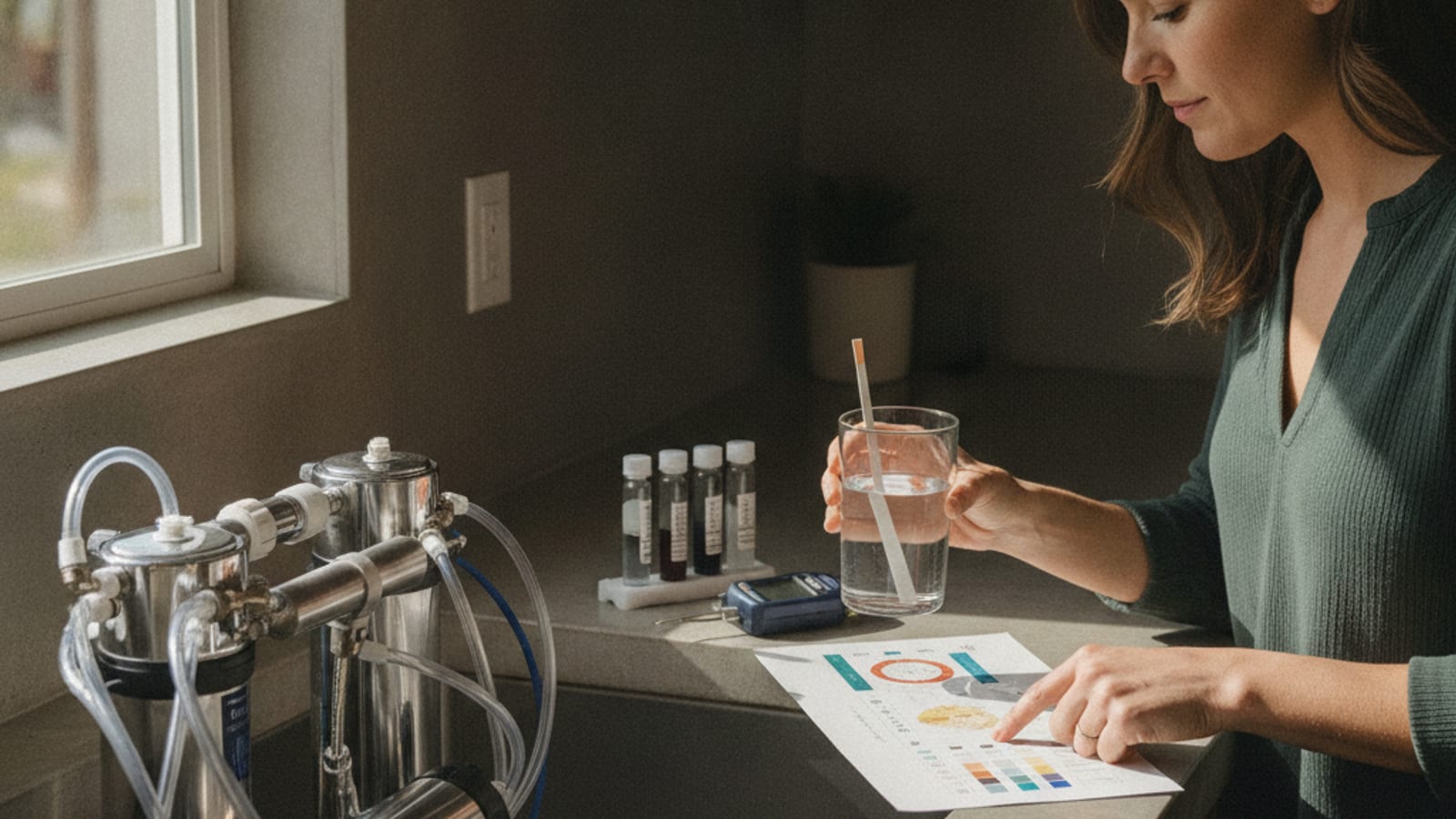
How to test your tap water at home
San Diego tap water regularly tests at 17 to 20 grains per gallon, which puts it in the very hard category. A five-minute test strip check gives you a directional reading you can act on. It won't replace a professional analysis, but it tells you enough to know whether treatment is worth exploring.
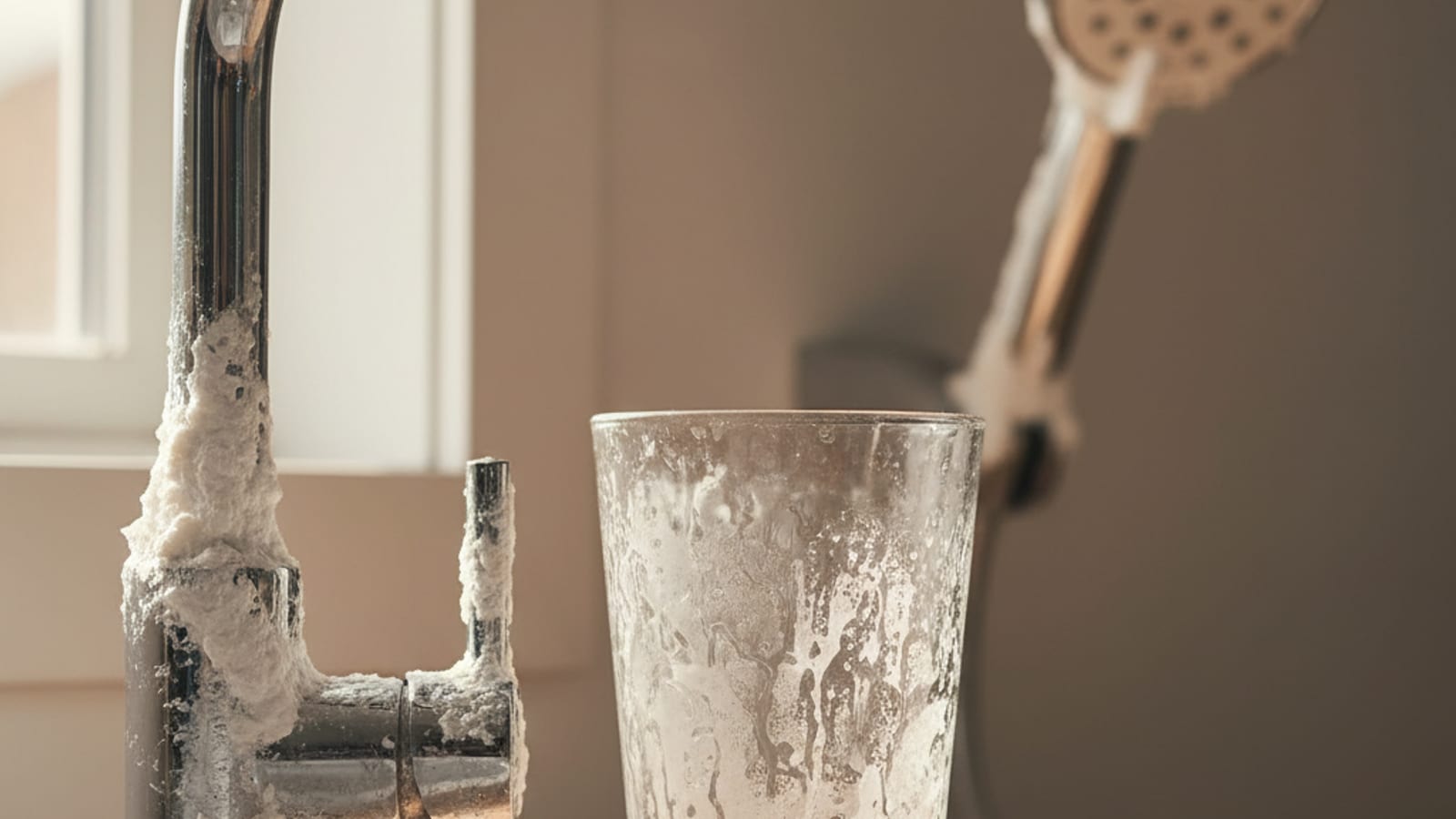
How to spot hard water in your home
Hard water doesn't smell or look different, so most homeowners don't notice it until the damage is already done. At 17 to 20 grains per gallon, San Diego sits well into the very hard range. Knowing the signs early can save you real money on appliances, plumbing, and fixtures.
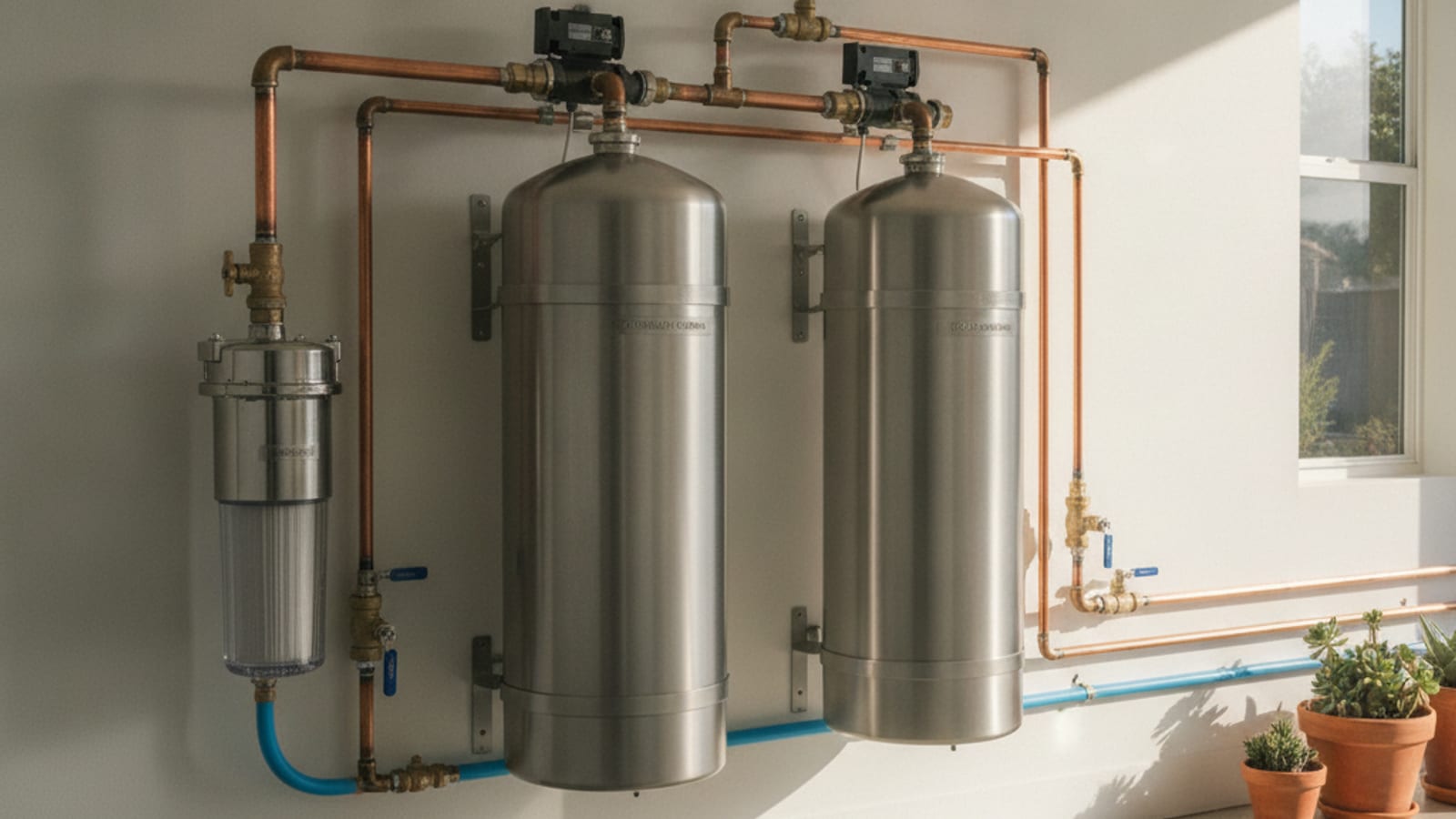
How a whole-house water filtration system works
A whole-house filter treats every tap in your home at the point where water enters the main line. That means filtered water for drinking, showering, laundry, and appliances, not just the kitchen sink. Understanding how the system is staged helps you know what it's doing and when it needs attention.