How to spot hard water in your home
Hard water doesn't smell or look different, so most homeowners don't notice it until the damage is already done. At 17 to 20 grains per gallon, San Diego sits well into the very hard range. Knowing the signs early can save you real money on appliances, plumbing, and fixtures.
What you'll learn
- The most common places hard water damage shows up first in your home
- Why soap scum and poor lather are hardness problems, not soap quality problems
- How scale inside a water heater cuts years off its lifespan
- How the soap-shake test confirms hardness in under 60 seconds without any equipment
- When what you're seeing is hard water versus a different water quality issue
Step by step
- Check faucet bases and showerheads for white, chalky deposits. That's calcium carbonate.
- Look at your glassware after the dishwasher. A cloudy film that won't rinse off is a mineral deposit.
- Fill a clear plastic bottle halfway with tap water, add a few drops of dish soap, and shake hard.
- Soft water produces instant suds. Hard water produces a flat, cloudy, milky layer instead.
- Pull the aerator off a kitchen faucet. If it's clogged with white flakes, hardness is the cause.
- Note your water heater's age. Scale accumulates inside the tank and shortens its life noticeably.
The soap test tells you whether hardness is a problem. It can't tell you how severe it is. A free in-home water test measures your exact GPG level and helps you choose between a salt softener and a salt-free conditioner.
Rather have a pro handle it?
Water filtration and treatment across San Diego County. A real person picks up, free in-home water test.
Keep learning.
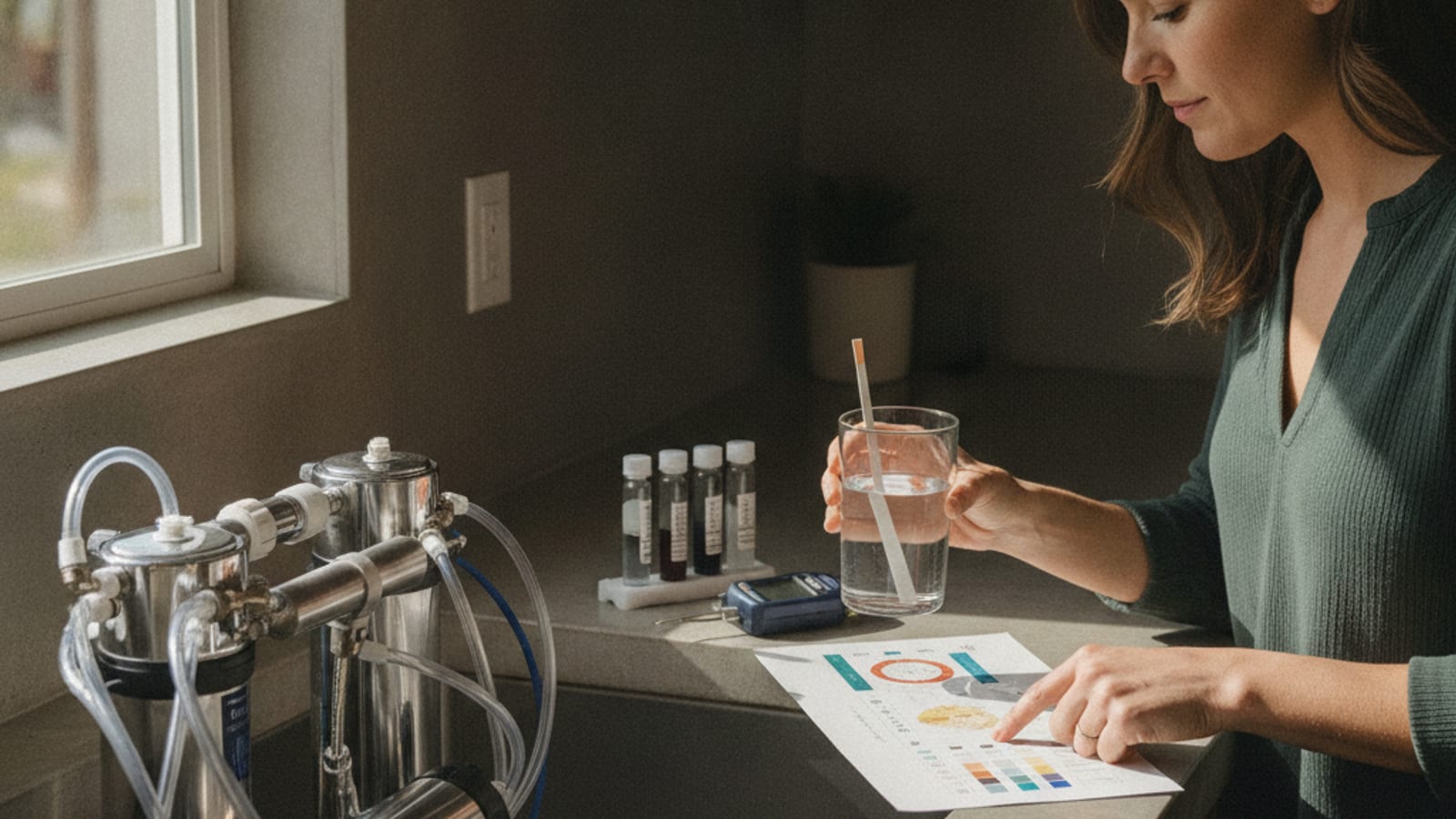
How to test your tap water at home
San Diego tap water regularly tests at 17 to 20 grains per gallon, which puts it in the very hard category. A five-minute test strip check gives you a directional reading you can act on. It won't replace a professional analysis, but it tells you enough to know whether treatment is worth exploring.
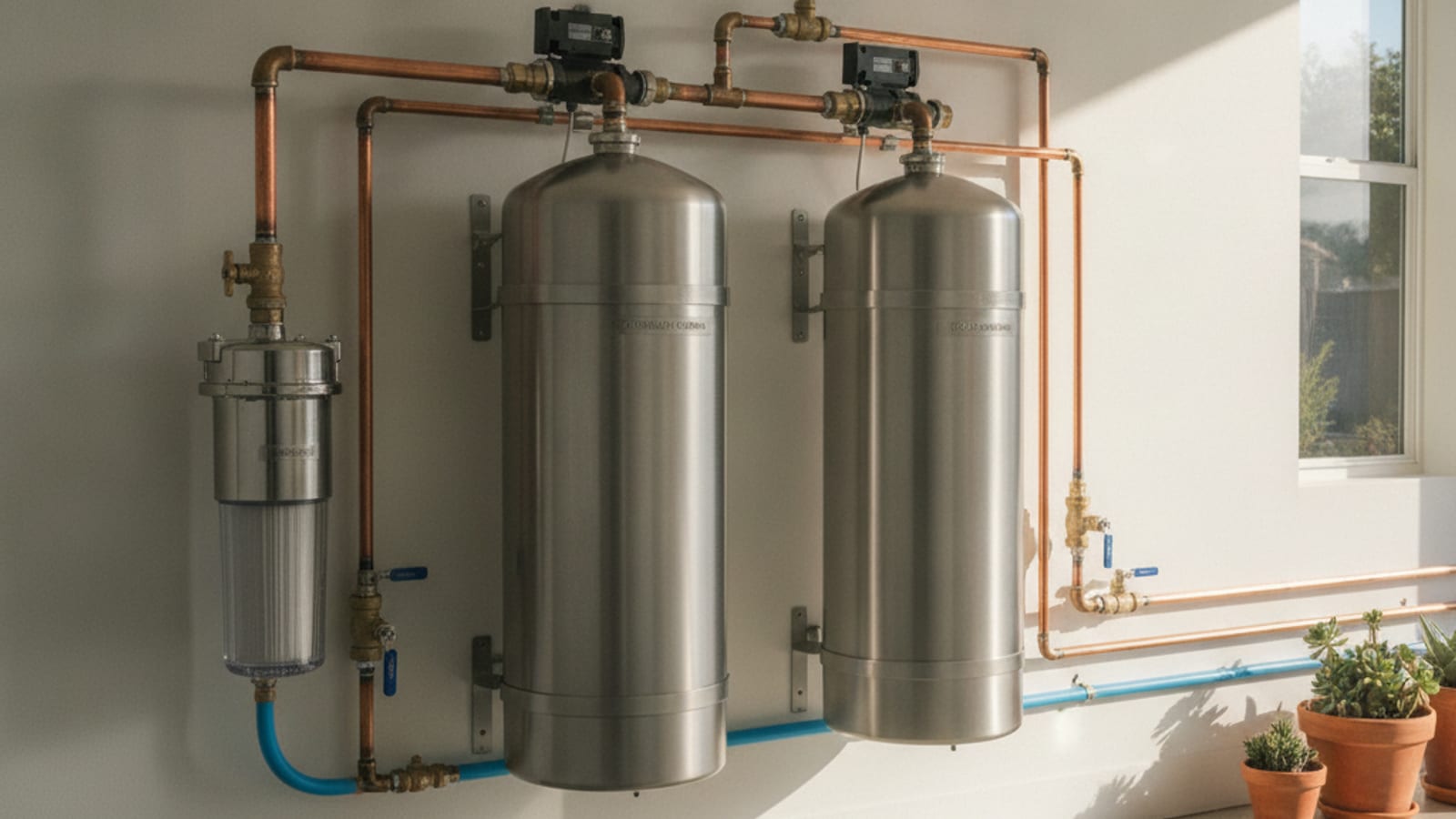
How a whole-house water filtration system works
A whole-house filter treats every tap in your home at the point where water enters the main line. That means filtered water for drinking, showering, laundry, and appliances, not just the kitchen sink. Understanding how the system is staged helps you know what it's doing and when it needs attention.
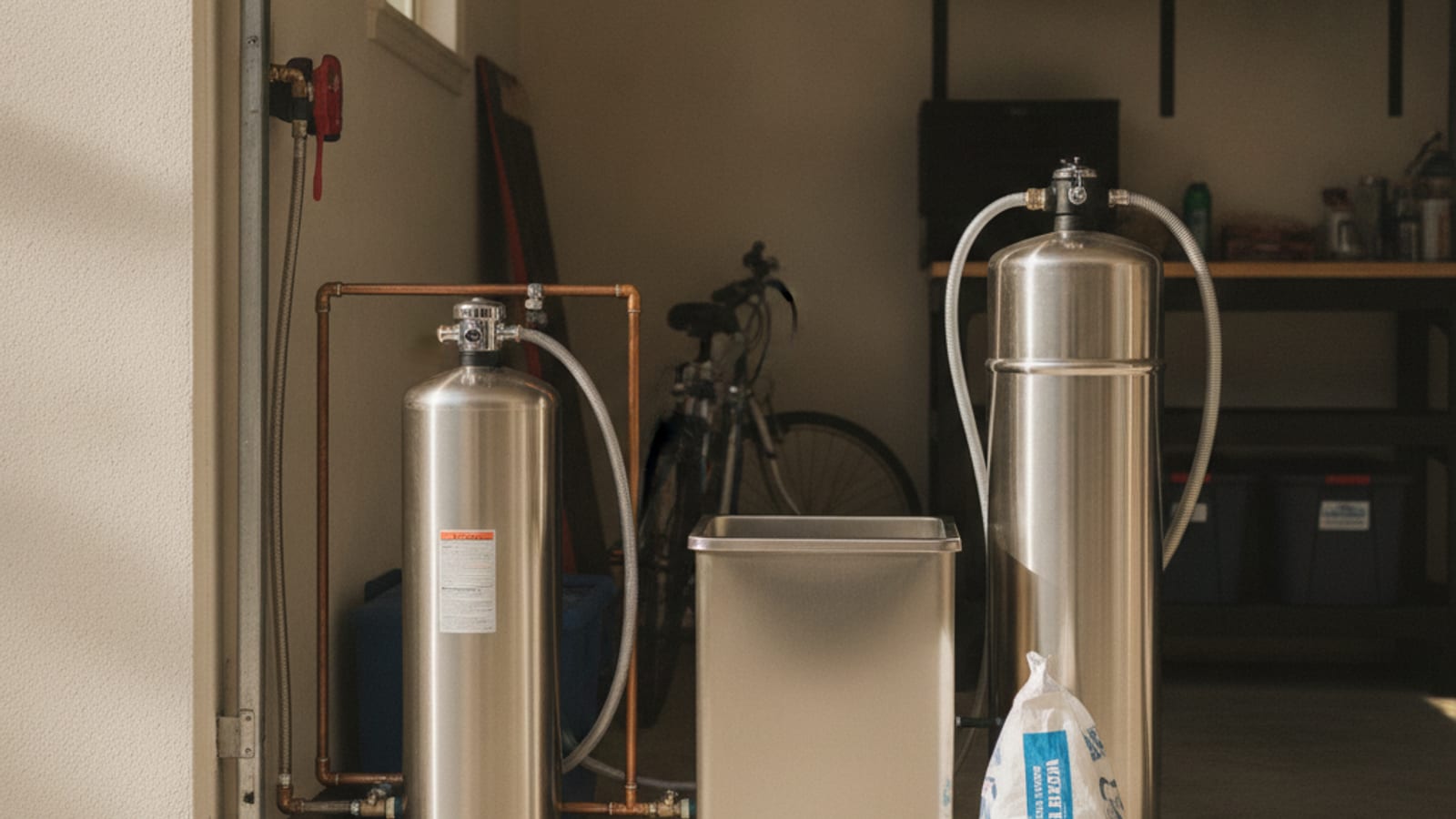
Salt-free conditioner vs salt softener, explained
Both systems address hard water, but they work differently and produce different results. One removes calcium and magnesium from the water entirely. The other changes the mineral structure so scale doesn't stick. Choosing the right one depends on your priorities, your plumbing, and how you use your water.